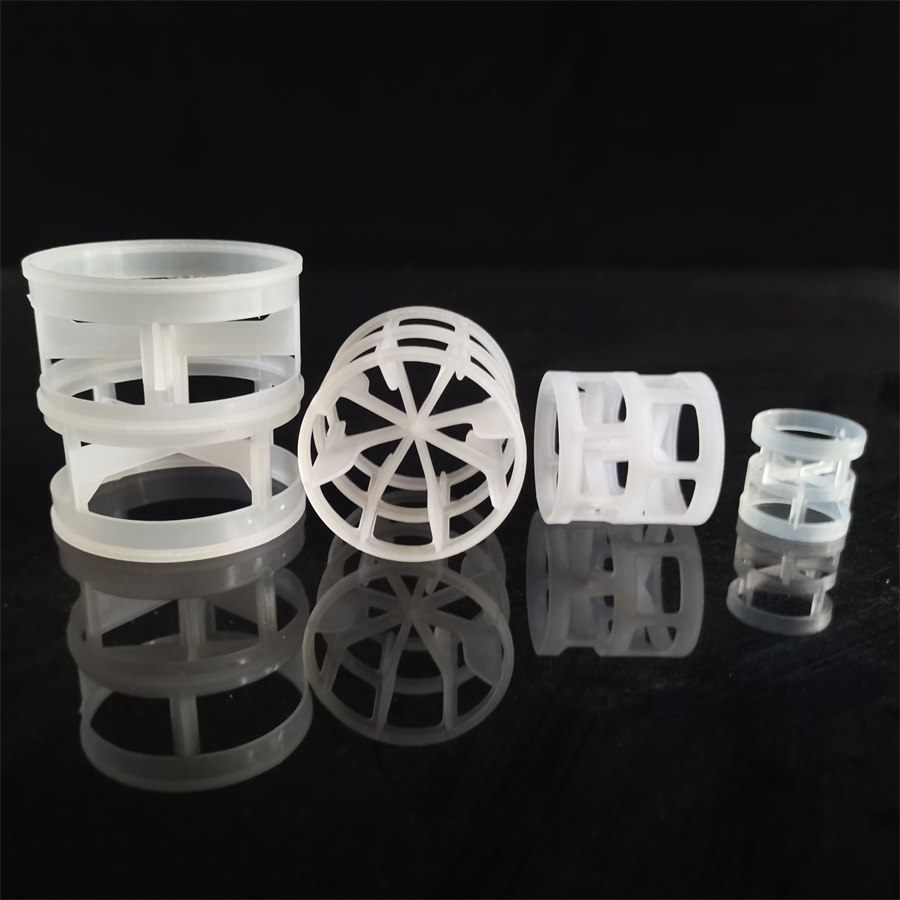
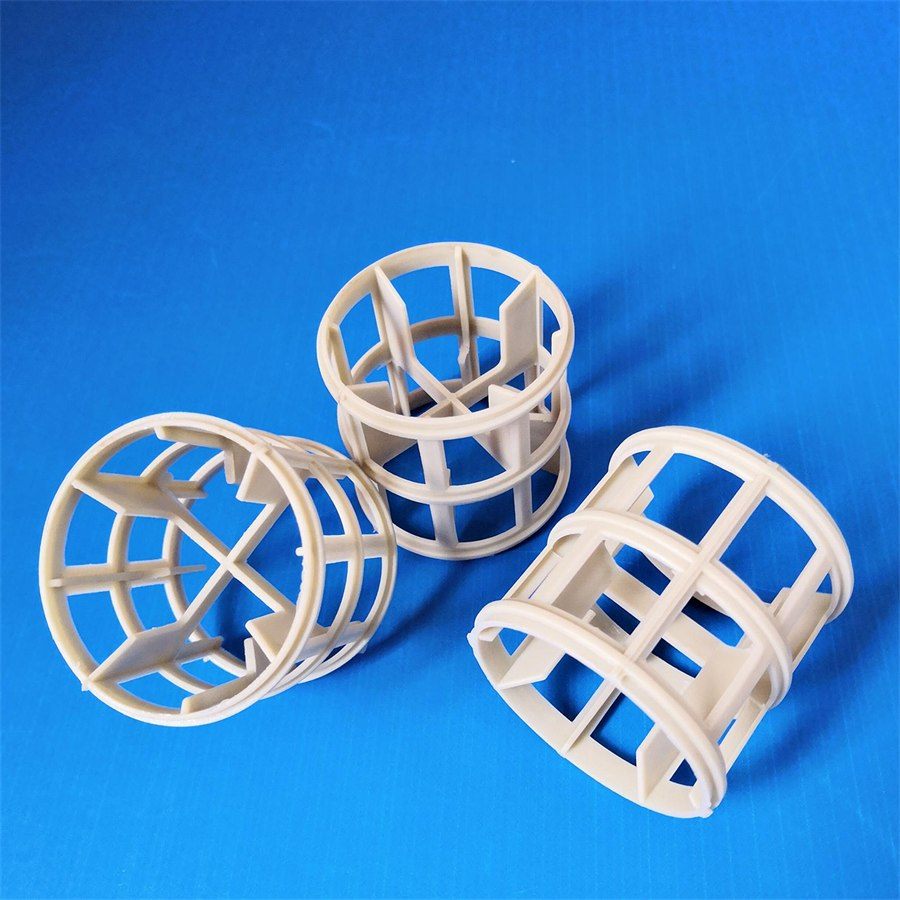
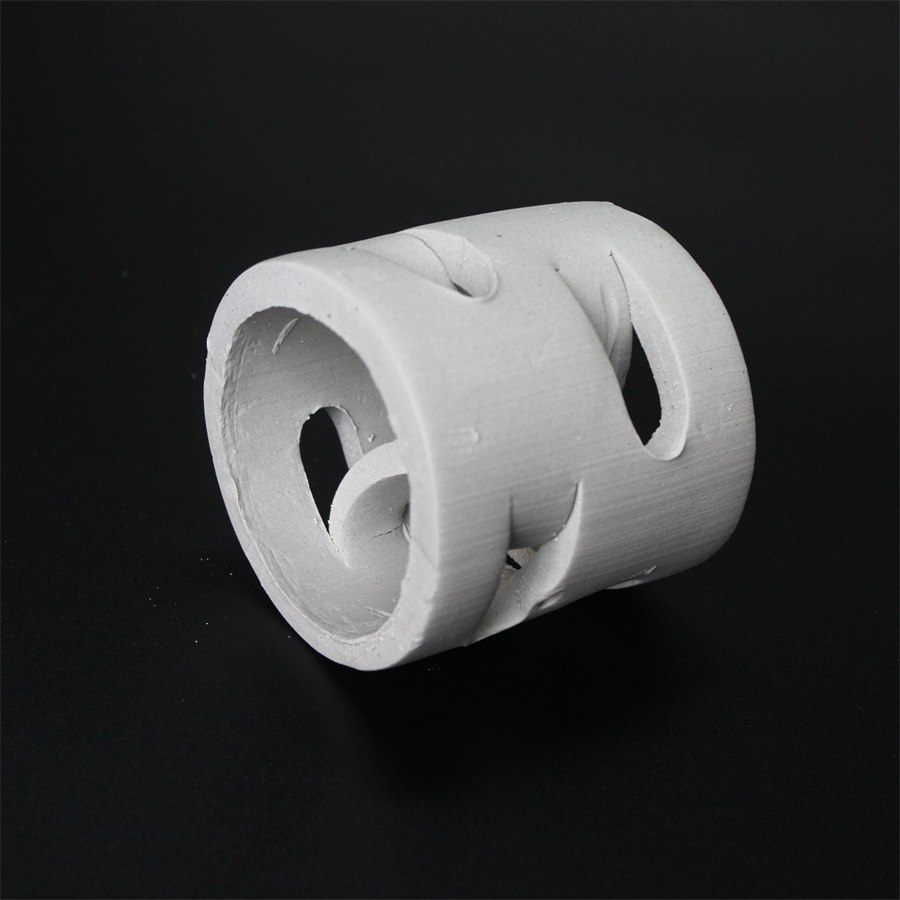
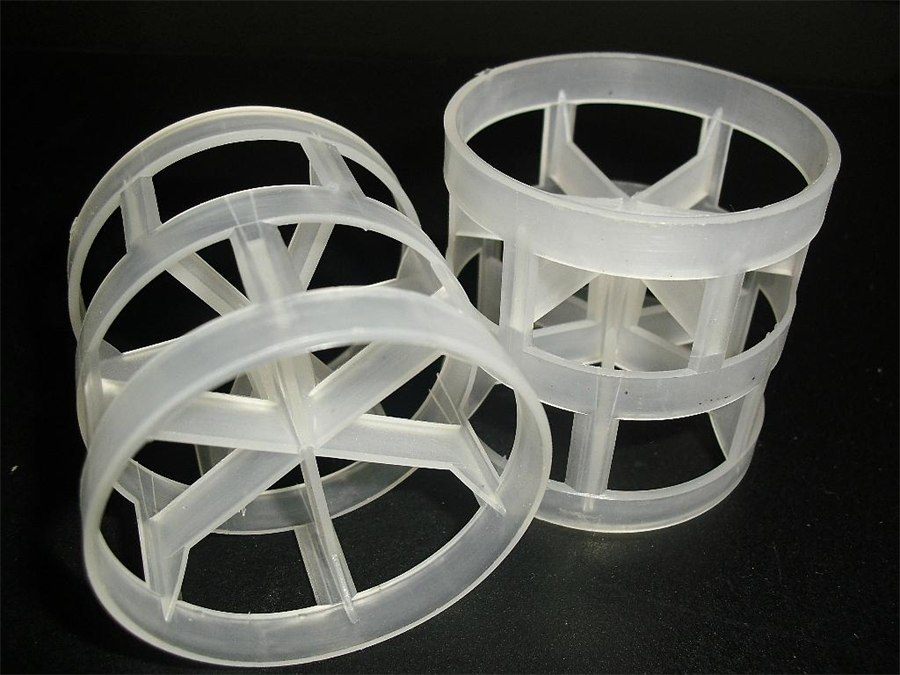
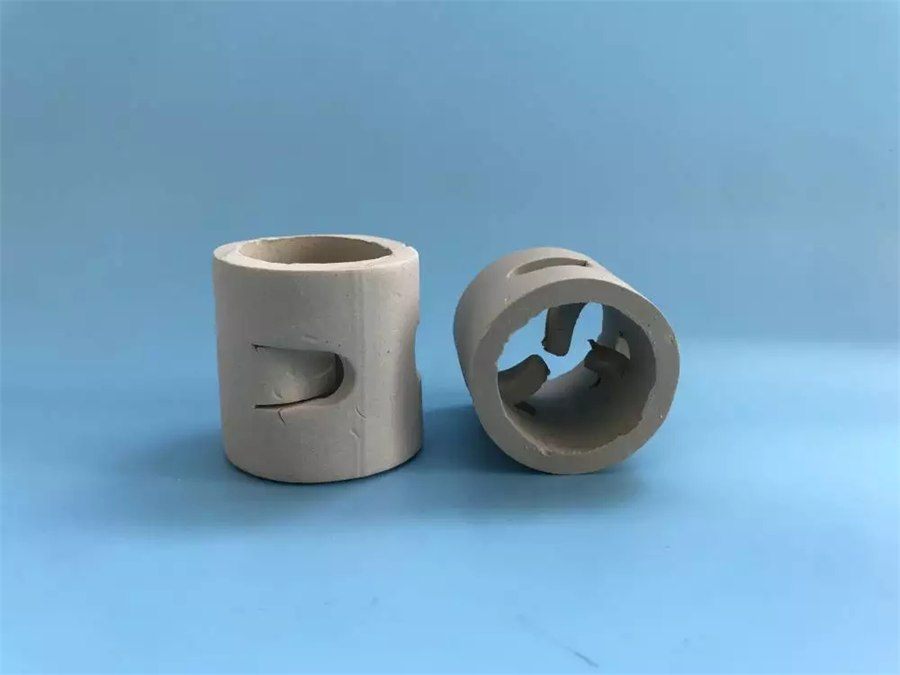
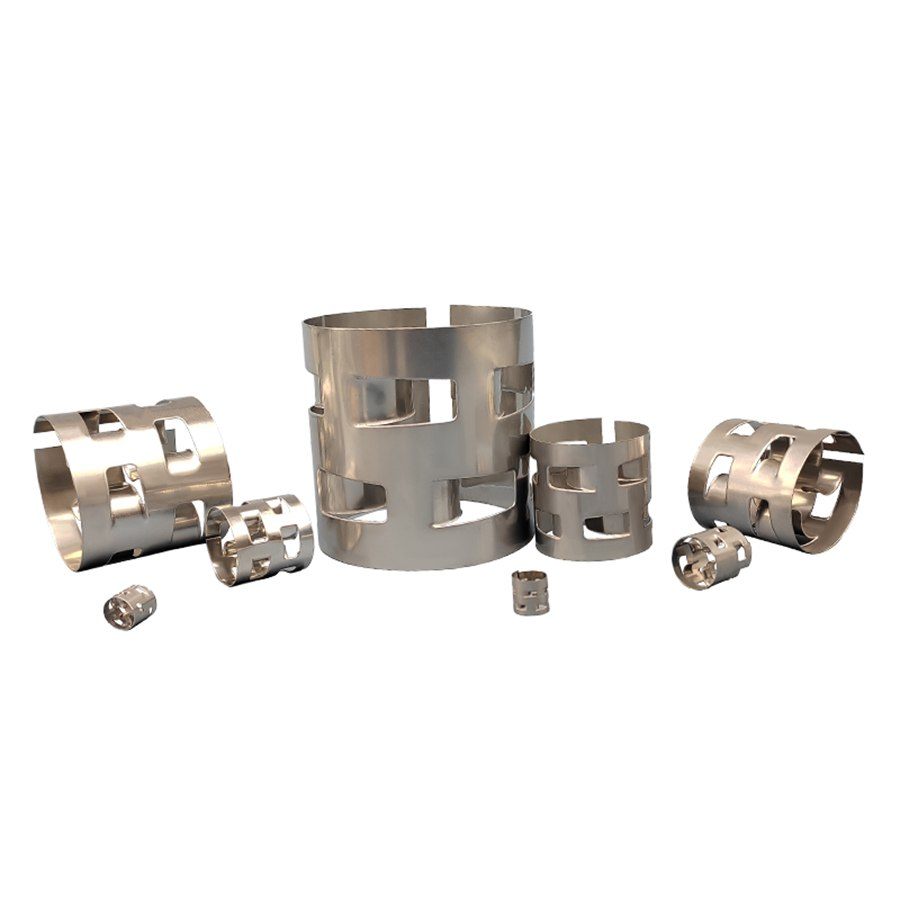
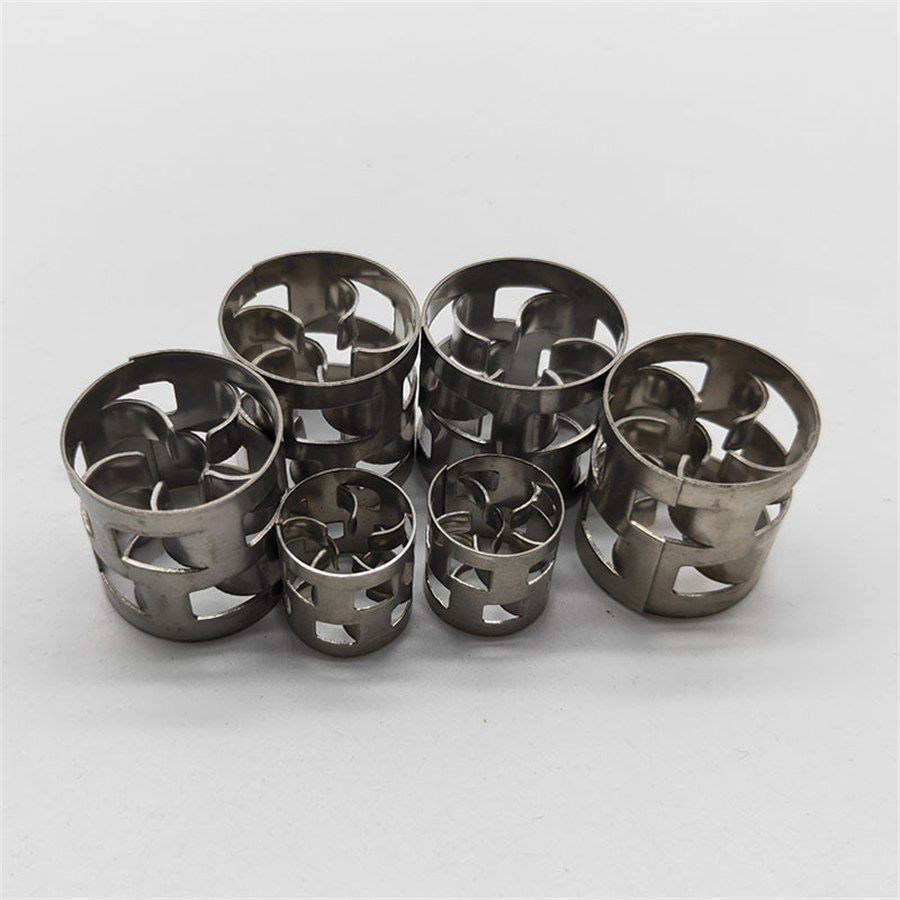
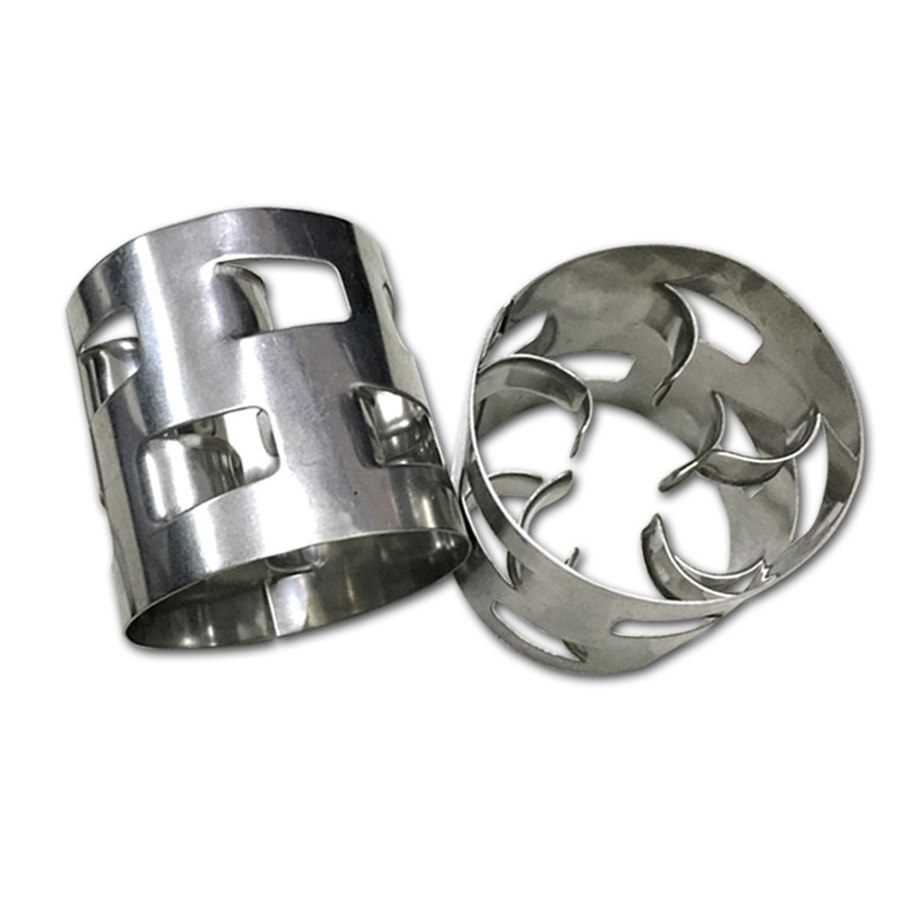
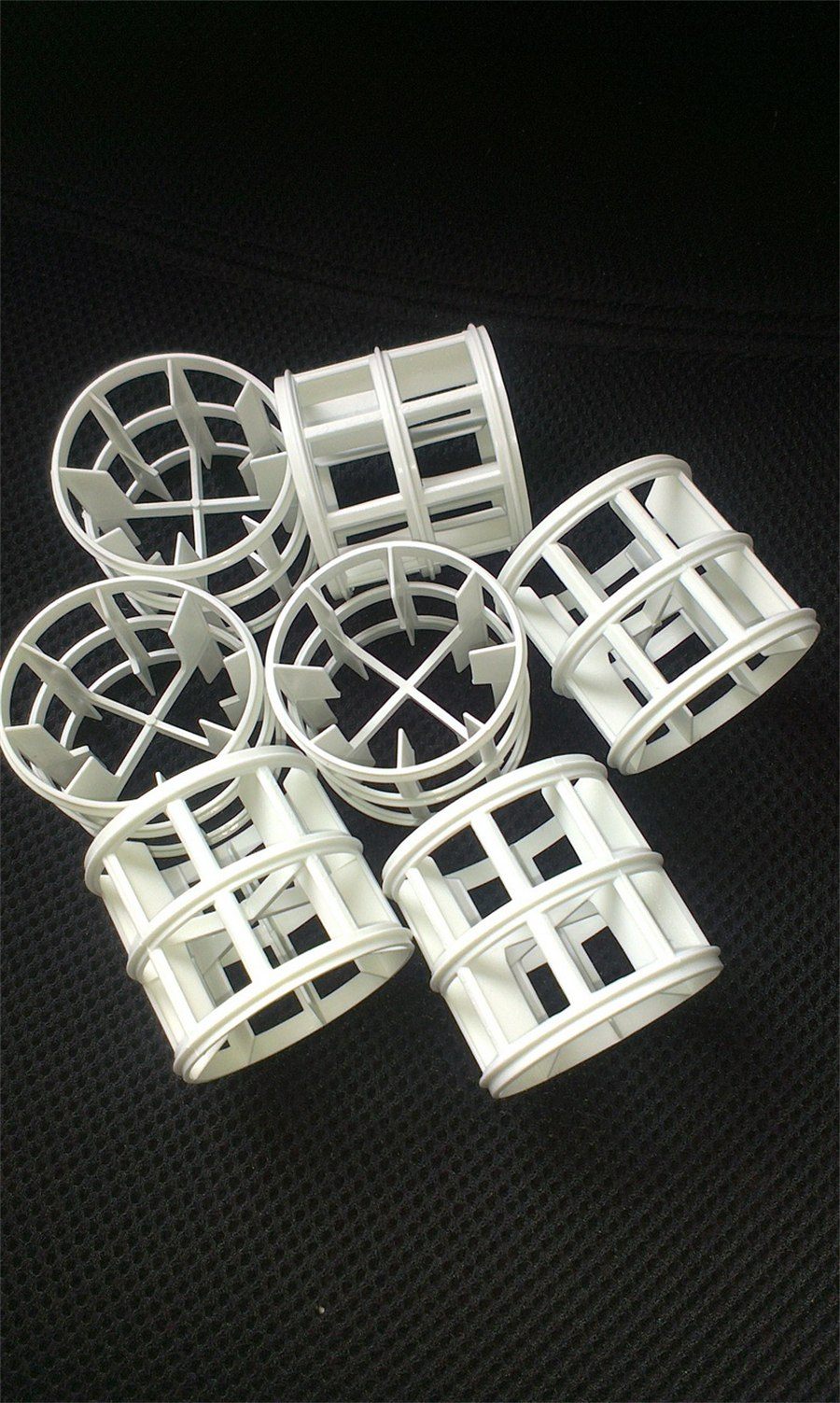
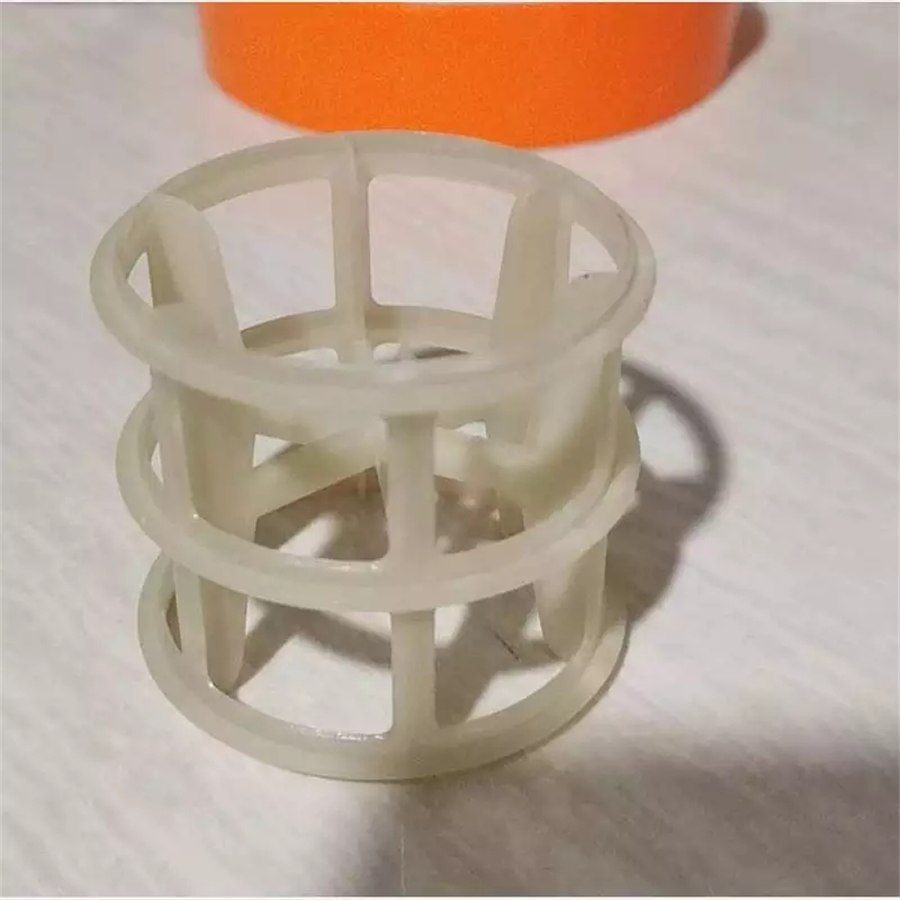
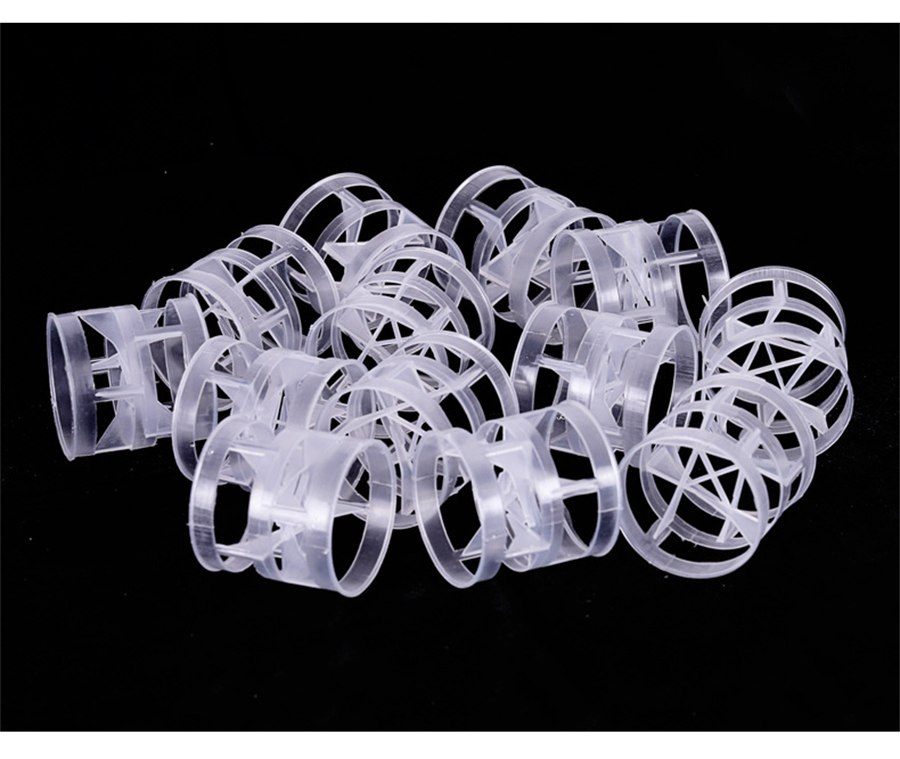
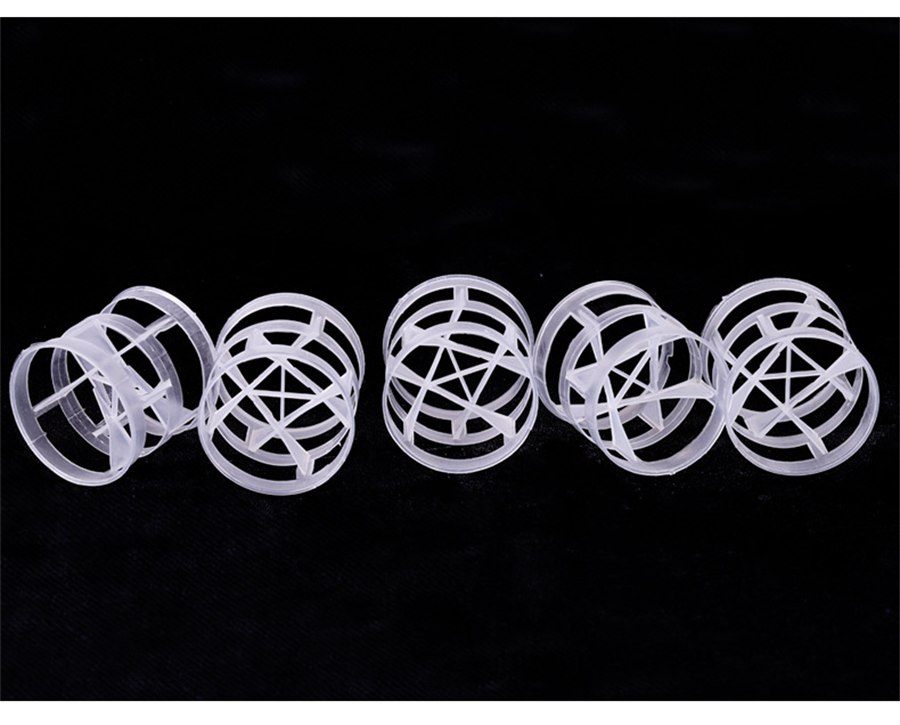
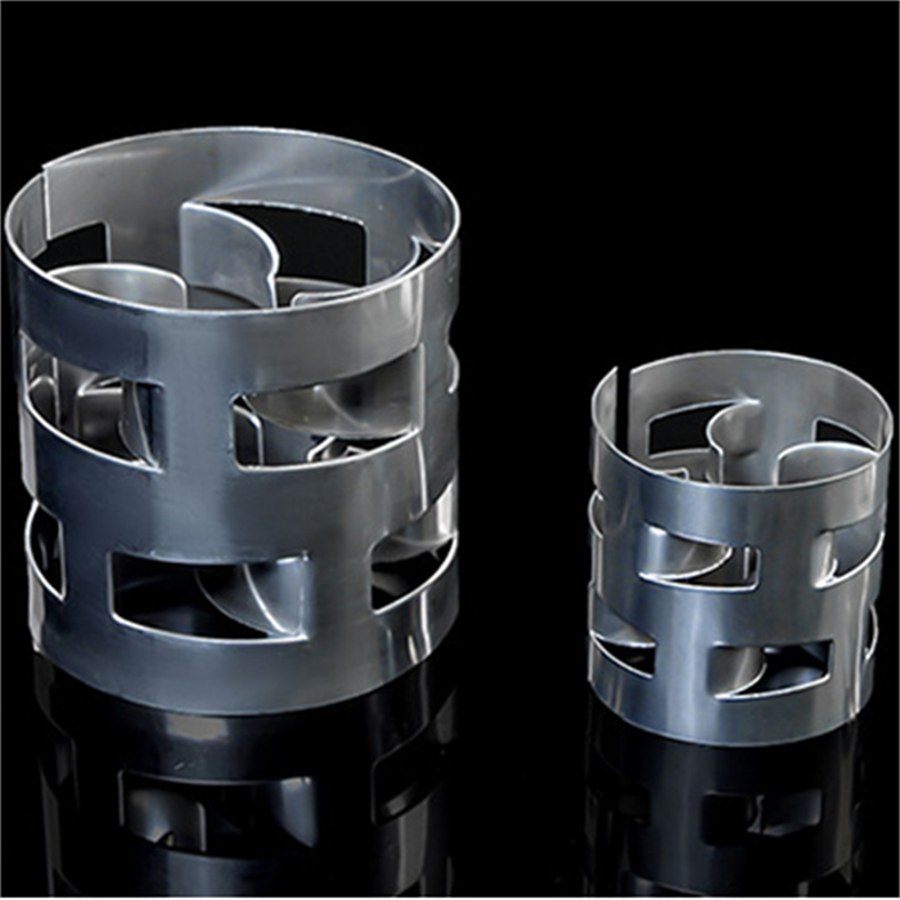
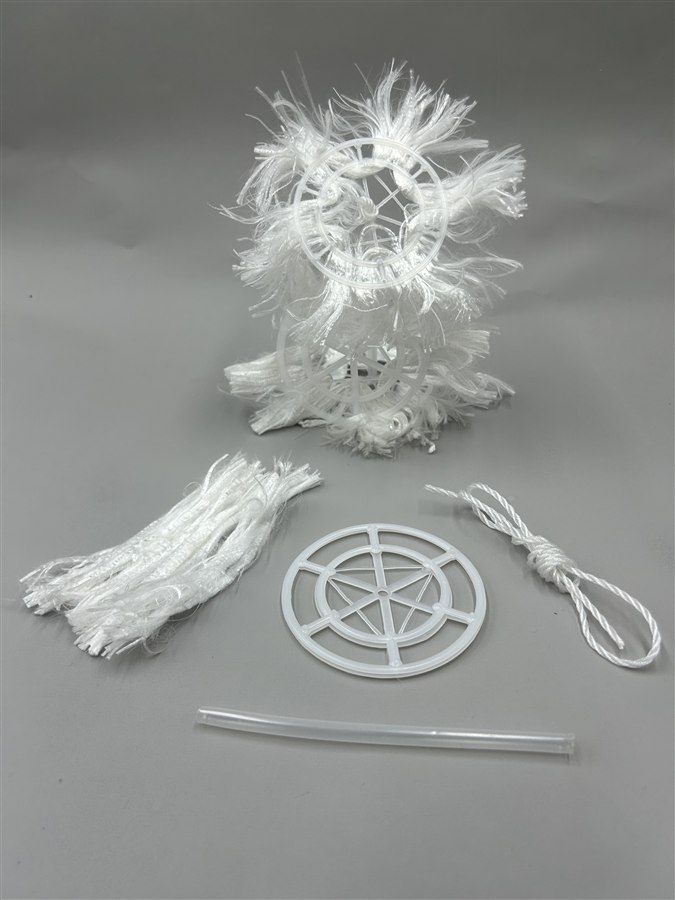
The Pall ring is an improvement on the Raschig ring: two rows of rectangular windows are punched through the cylinder wall, one side of each cut wall stays attached while the other bends inward to form an inward tongue, and the side edges of the tongues meet near the centre of the ring. The open wall greatly improves the utilisation of the space and surface inside the ring, with low gas resistance and even liquid distribution. Compared with a Raschig ring, gas throughput can rise by more than 50%, mass-transfer efficiency improves by about 30%, capacity increases by over 50% and pressure drop falls by 50%. It is one of the most widely used packings.

The Pall ring is an evolution of the plain Raschig ring: instead of closing the wall of the cylinder, it cuts windows through it and bends the displaced material inward. Both sides of the design change as a result: the free area open to the gas, and the wetted surface open to the liquid.
Two rows of staggered windows are punched through the cylinder wall, so the ring is a largely open frame rather than a closed tube. Gas rising through the bed finds a larger free area and less resistance than it would in a plain ring of the same nominal diameter.
The material displaced from every window is bent inward to form a tongue. The tongues break up the descending liquid and spread it back over the wall, so the film is renewed instead of channelling down the same path, and they add contact area inside the ring.
The rings are dumped into the column in bulk, so there is no orientation work and no stacking pattern to maintain. The bed can be unloaded, washed and re-loaded for repacking work, and the open wall has no fine openings in which solids can lodge.
| Type | Size d × H × δ / mm | Bulk density / kg/m³ | Surface area / m²/m³ | Void space / % | Dry packing factor / m⁻¹ | Packing count / pcs per m³ |
|---|---|---|---|---|---|---|
| Metal Pall ring — 1Cr18Ni9Ti · 0Cr18Ni9 · 304 · aluminium alloy | ||||||
| 16 × 16 × 0.8 | 216 | 240 | 94 | 300 | 143,000 | |
| 25 × 25 × 0.8 | 427 | 219 | 94 | 250 | 56,900 | |
| 38 × 38 × 0.8 | 365 | 130 | 94 | 150 | 13,000 | |
| 50 × 50 × 1.0 | 390 | 112 | 95 | 130 | 6,500 | |
| 76 × 76 × 1.2 | 313 | 70 | 95 | 80 | 1,860 | |
| Plastic Pall ring — PP · R-PP · CPVC · PVDF · PFA | ||||||
| 16 × 16 × 0.8 | 141 | 287 | 91 | 250 | 112,000 | |
| 25 × 25 × 0.8 | 100 | 194 | 89 | 294 | 63,500 | |
| 38 × 38 × 0.8 | 98 | 155 | 89 | 220 | 15,700 | |
| 50 × 50 × 1.0 | 87 | 112 | 89 | 146 | 7,000 | |
| 76 × 76 × 1.2 | 71 | 73 | 90 | 90 | 1,930 | |
| Ceramic Pall ring | ||||||
| 25 × 25 × 3 | 680 | 260 | 78 | — | 50,000 | |
| 50 × 50 × 5 | 430 | 135 | 74 | — | 6,500 | |
| 80 × 80 × 8 | 610 | 110 | 70 | — | 1,900 | |
Every figure that depends on the size, the material or the batch is stated as on request rather than copied from a table that describes the packing class in general. We confirm the values we can guarantee for your order in the quotation, and we do not publish price, efficiency or removal numbers for this product.


Send the column diameter, the packing height, the gas and liquid loads and the medium — we will confirm the right size, the material and the export packaging.
Request a QuoteNo obligation · response within 24h (working days)